Introduction
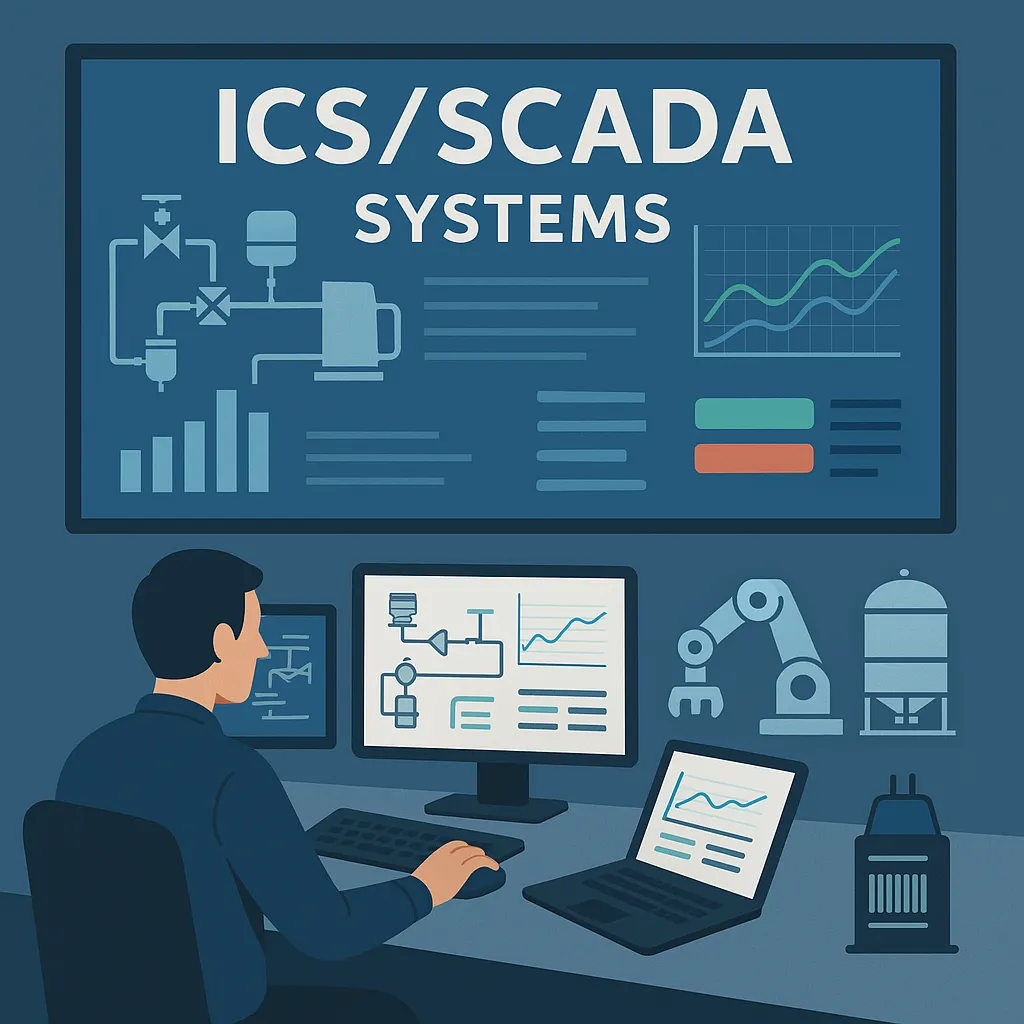
Industrial Control Systems (ICS) and Supervisory Control and Data Acquisition (SCADA) systems are essential for managing critical infrastructure, including power plants, water treatment facilities, oil refineries, and transportation networks. Originally designed for reliability and operational efficiency, these systems were not built with modern cybersecurity in mind. As a result, they have become high-value targets for cyberattacks with the potential to cause severe physical, economic, and societal damage.
This article explores the power and impact of cyber threats targeting ICS/SCADA systems, examining their vulnerabilities, historical attacks, and how organizations can mitigate the risks.
Understanding ICS/SCADA Systems
ICS is a collective term for control systems used in industrial production, including hardware and software that monitor and control physical processes. SCADA, a subset of ICS, is designed for real-time monitoring and remote control of industrial equipment.
Key components include:
Human-Machine Interfaces (HMI)
Programmable Logic Controllers (PLC)
Remote Terminal Units (RTU)
Data Communication Networks
These systems control critical operations such as opening valves, starting pumps, and monitoring sensor data across geographically dispersed assets.
Why ICS/SCADA Are High-Value Targets
Several factors make ICS/SCADA systems especially vulnerable to powerful cyber threats:
Legacy technology often lacks modern security mechanisms
Always-on operations hinder routine patching and updates
Air-gapped assumptions are no longer valid due to increasing IT-OT integration
Insecure protocols such as Modbus, DNP3, and IEC-104 transmit data without encryption or authentication
Attackers targeting these systems can achieve significant impact, ranging from service disruption to physical destruction.
How Powerful Are Cyberattacks on ICS/SCADA?
Cyberattacks on industrial systems are among the most powerful and dangerous digital threats due to their ability to:
1. Cause Physical Damage
Malware like Stuxnet altered the speed of uranium centrifuges, physically damaging nuclear equipment.
Triton/Trisis targeted safety controllers that protect human lives and infrastructure.
2. Disrupt Essential Services
BlackEnergy malware caused widespread power outages in Ukraine.
Disruption of water supply, oil pipelines, or transportation can paralyze entire regions.
3. Threaten Human Safety
Attacks on safety systems or chemical processing facilities can lead to explosions or toxic leaks.
4. Impact National Security and Economy
Nation-state actors may use ICS/SCADA attacks as tools of cyberwarfare.
The economic losses from prolonged outages can reach millions or even billions of dollars.
Notable Real-World Incidents
Stuxnet (2010)
- Target: Iranian nuclear facility
- Method: Infected PLCs via USB drives
- Impact: Physically destroyed centrifuges used in uranium enrichment
BlackEnergy (2015)
- Target: Ukrainian power grid
- Method: Phishing and malware payloads
- Impact: Blackout affecting over 230,000 citizens
Triton/Trisis (2017)
- Target: Safety Instrumented System (SIS) at a petrochemical plant
- Method: Exploited Schneider Electric Triconex controllers
- Impact: Attempted to disable emergency shutdown mechanisms
Industroyer (2016)
- Target: Electrical substations in Ukraine
- Method: Controlled ICS protocols directly
- Impact: Coordinated power outage across Kyiv
Key Challenges in ICS/SCADA Security
- Operational Continuity vs. Security: Downtime is unacceptable in industrial settings
- Poor Visibility: Lack of monitoring tools for OT environments
- Human Factor: Lack of cybersecurity awareness among plant operators
- Vendor Constraints: Some systems are proprietary and difficult to patch or secure
Mitigation Strategies
Network Segmentation: Isolate ICS networks from corporate IT and the internet
Use of Firewalls and Intrusion Detection Systems
Regular Patch Management and Vulnerability Assessment
Security Awareness and Training for OT personnel
Implement Monitoring and Logging to detect anomalies in real time
Adopt Industry Standards such as NIST SP 800–82, IEC 62443, and ISO 27019
Conclusion
Cyberattacks on ICS and SCADA systems are among the most powerful and potentially devastating threats in the modern cyber landscape. Their ability to cause real-world, physical consequences makes them distinct from typical IT threats. Protecting these systems is not just a technical requirement — it is a matter of national and human safety.
Organizations must prioritize cybersecurity in industrial environments through layered defense, cross-disciplinary collaboration, and continuous vigilance.
References
Symantec. (2011). W32.Stuxnet Dossier. https://www.symantec.com/content/en/us/enterprise/media/security_response/whitepapers/w32_stuxnet_dossier.pdf
Dragos. (2017). CrashOverride: Analysis of the Threat to Electric Grid Operations. https://www.dragos.com/blog/crashoverride/
FireEye/Mandiant. (2017). TRITON Malware Targeting Schneider Electric Safety Systems. https://www.mandiant.com/resources/triton-malware
CISA. ICS-CERT Resources. https://www.cisa.gov/ics
NIST. (2015). Guide to Industrial Control Systems Security (SP 800–82). https://csrc.nist.gov/publications/detail/sp/800-82/rev-2/final